

When it comes to large-scale construction projects, choosing the right bitumen is critical for longevity, safety, and performance. Among the various types, Polymer Modified Bitumen (PMB) and Blown Bitumen are the best options for major infrastructure projects. These bitumen are highly resistant to high temperatures, heavy traffic loads, and environmental stress, making them ideal for use in roads, highways, bridges, and other large construction projects. Quickly identifying the appropriate bitumen ensures project efficiency and cost-effectiveness. In this article, I’ll explain how to choose the best construction price.
Characteristics of Bitumen Suitable for Construction
Bitumen used in large construction projects must meet specific technical and performance requirements to ensure stability and longevity. Bitumen with inadequate thermal or load resistance can lead to rutting, cracking, and premature deterioration of roads and structures. Additionally, proper adhesion properties are required to effectively bond with aggregates, resulting in a strong, durable asphalt mix.
Elasticity and flexibility are also important properties. Construction bitumen should withstand minor movements caused by temperature changes or traffic loads without cracking. Polymer-modified bitumen, for example, have increased elasticity, which reduces thermal cracking during cold seasons and softens during hot weather. Resistance to oxidation and aging is also important because it increases the operational lifespan of pavements and other infrastructure, ensuring consistent performance under a variety of environmental conditions.
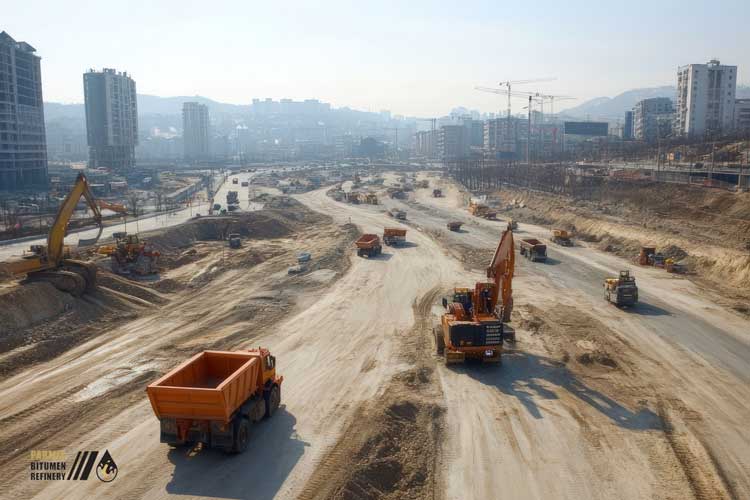
Introducing the Types of Bitumen Suitable for Construction
Bitumen types must be chosen specifically for construction projects based on performance criteria, climate conditions, and structural load. The main types are summarized below, with each providing unique benefits for large-scale applications.
Penetration Bitumen
Penetration bitumen is the most common type of bitumen, classified by its penetration grade, such as Bitumen 85/100. It is commonly used in general road construction due to its consistent performance and ease of use. Penetration bitumen provides dependable binding with aggregates and is resistant to minor temperature variations, making it appropriate for roads with moderate traffic volumes.
However, in high-load or high-temperature areas, standard penetration bitumen may require modification. It performs best in temperate climates where extreme thermal fluctuations are uncommon. Using the proper penetration grade ensures that the pavement retains its structural integrity and resists surface deformation over time. Bitumen 85/100, for example, is commonly used in highway construction as a base and binder course because it provides a good balance of hardness and flexibility.
Blown Bitumen
Blown bitumen, also called oxidized bitumen, is created by blowing air through heated bitumen, increasing its softening point and viscosity. This process improves its high-temperature performance and aging resistance, making it appropriate for pavements subjected to heavy traffic or hot climates. Its strength makes it suitable for highways, airport runways, and bridge decks.
Blown bitumen’s superior adhesive properties ensure a strong bond with aggregates, reducing rutting and deformation under constant mechanical stress. It is commonly used in surface courses where durability and stability are essential. Its increased viscosity also provides better resistance to water penetration, extending the life of roads and lowering maintenance costs.
Cutback Bitumen
Cutback bitumen is a liquid form of bitumen created by dissolving it in a petroleum solvent. Its main advantage is its ease of use at ambient temperatures, making it ideal for cold-weather applications or areas requiring quick construction. Cutback bitumen penetrates aggregates more effectively, improving adhesion and ensuring a consistent asphalt mix.
This type of bitumen is commonly used for priming, tack coats, and surface dressing, where standard hot bitumen may be difficult to work with. However, due to environmental concerns about solvent evaporation, bitumen emulsions have gradually gained popularity in many modern applications. Cutback bitumen is still a reliable option in areas where controlled handling and quick application are required.
Bitumen Emulsion
Bitumen emulsions are fine suspensions of bitumen droplets in water stabilized with emulsifying agents. Their cold application capability makes them ideal for large-scale projects in areas with limited heating infrastructure. Emulsions improve application safety by eliminating the need for high-temperature handling, thereby reducing fire hazards and energy consumption.
Bitumen emulsions are ideal for surface treatment, road maintenance, and patching projects, particularly in remote areas or where hot-mix facilities are unavailable. They penetrate aggregates effectively and have excellent adhesion, forming a long-lasting layer for subsequent asphalt application. Their versatility and environmental friendliness have made them increasingly popular for construction and maintenance projects.
Polymer Modified Bitumen
Polymer Modified Bitumen (PMB) is a type of high-performance bitumen that has been modified with polymers to improve elasticity, thermal stability, and mechanical strength. Because of its resistance to rutting, cracking, and aging, PMB is the preferred material for large-scale projects with high traffic volumes, such as expressways, urban roads, and airport runways.
The polymer content in PMB increases flexibility, allowing pavements to withstand temperature extremes without deformation. PMB also has excellent adhesion to aggregates and can withstand repeated heavy loads without structural damage. PMB ensures reliability and durability for projects that require long-term performance with minimal maintenance. Furthermore, PMB can be tailored to specific regional climate conditions, ensuring optimal performance in both hot and cold environments.

Important Tips for Buying the Best Price in Construction
Buying bitumen at the best price necessitates both technical and strategic considerations. First and foremost, it is critical to evaluate quality specifications. To ensure that the bitumen you choose meets your project’s requirements, consider parameters such as penetration grade, softening point, viscosity, and polymer content. Compromise quality to save money may result in more frequent maintenance and higher long-term costs. Always request laboratory test reports from suppliers to ensure that the bitumen meets recognized standards.
Another important consideration is supply chain reliability and vendor reputation. Choosing a supplier with reliable delivery schedules, adequate storage facilities, and professional support helps to reduce project delays and material waste. Comparing bitumen prices from multiple manufacturers, while taking into account transportation and handling costs, can provide the best value. Also, purchasing in bulk directly from manufacturers can result in significant savings, especially for large-scale construction projects. Consider seasonal price fluctuations and market trends to further optimize procurement costs.
Purchasing Bitumen for Construction at Parmis Bitumen
Parmis Bitumen is a reputable manufacturer and exporter of high-quality bitumen used in large construction projects. Parmis Bitumen’s diverse product portfolio, which includes Penetration Bitumen, Blown Bitumen, Cutback Bitumen, Bitumen Emulsion, and Polymer Modified Bitumen, ensures that every construction requirement is met precisely and reliably. Parmis Bitumen offers competitive pricing, technical support, and timely delivery, making it the preferred partner for long-term infrastructure development.