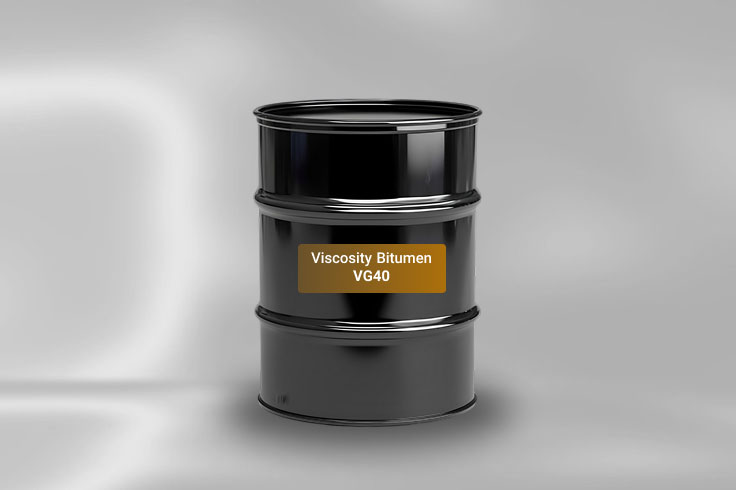
Bitumen VG 40 is a viscosity-graded paving bitumen used where a higher-viscosity binder is specified for asphalt and pavement applications. Its suitability depends on the approved mix design, climate conditions, traffic loading and project specification. On this page, you can review the technical parameters commonly used to assess VG 40, compare it with VG 30 at a high level, and request product documentation, packaging details and a quotation for your destination.
VG 40 is indispensable for all-weather and rugged projects where heavy-duty durability is needed. Providing unparalleled durability with amazing stability and adhesion capabilities, this high-viscosity bitumen makes it indeed a must-have element of commercial and industrial usage. Knowing its features, benefits, and price will enable you to purchase the right one according to your needs.
What is Bitumen VG 40?
VG 40 is a viscosity grade used to describe paving bitumen by its viscosity performance at defined test temperatures. In practical purchasing and engineering decisions, the grade should not be selected by name alone. The required binder must be checked against the project specification, the approved asphalt mix design and the relevant test results for the supplied batch.
Viscosity grading is designed to give buyers and engineers a clearer basis for evaluating binder consistency at elevated temperatures. Industry references for VG 40 commonly identify minimum viscosity requirements at 60°C and 135°C alongside penetration, softening point, flash point and solubility requirements. However, the certificate of analysis for the actual shipment remains the controlling document for a purchase decision.
Bitumen VG 40 Technical Specifications
The table below presents the typical parameters used to evaluate VG 40 bitumen. Please request the current Certificate of Analysis for the batch being quoted, as actual results may vary within the approved specification range.
| Property |
Typical Requirement* |
Test Method |
Why It Matters |
| Absolute Viscosity at 60°C |
As stated in the applicable product specification |
ASTM D2171 / applicable equivalent |
Helps assess binder consistency under elevated service temperatures. |
| Kinematic Viscosity at 135°C |
As stated in the applicable product specification |
ASTM D2170 / applicable equivalent |
Supports handling and mixing-temperature evaluation. |
| Penetration at 25°C |
As stated in the applicable product specification |
ASTM D5 / applicable equivalent |
Indicates consistency under the defined test condition. |
| Softening Point |
As stated in the applicable product specification |
ASTM D36 / applicable equivalent |
Provides a reference point for temperature-related behavior. |
| Flash Point |
As stated in the applicable product specification |
ASTM D92 / applicable equivalent |
Relevant to handling and safety planning. |
| Solubility |
As stated in the applicable product specification |
ASTM D2042 / applicable equivalent |
Helps indicate the purity of the bituminous binder. |
*The applicable requirement must be confirmed against the agreed standard, contract specification and current product data sheet.
Typical Uses of VG 40 Bitumen
VG 40 bitumen is commonly evaluated for asphalt paving and pavement work where the project specification calls for a higher-viscosity grade. Typical applications may include road construction, pavement rehabilitation and asphalt mixtures designed for demanding service conditions. Final selection should always be made by the project engineer or contractor based on local climate, traffic loading, aggregate characteristics, mix design and governing specifications.
- Asphalt paving projects where VG 40 is specified
- Road maintenance and rehabilitation work
- Heavy-traffic pavement applications, subject to mix-design approval
- Projects requiring viscosity-grade bitumen rather than penetration-grade bitumen
Before ordering, confirm the required standard, test limits, delivery format and approval procedure with the project owner or engineering consultant.
Key Features of Bitumen VG 40
Bitumen VG 40 is a high-quality Viscosity Grade Bitumen ideal for industrial use. Its key properties and optimum working ranges are given below.
High Viscosity
Bitumen VG 40 is very dense, neither flowing nor softening at high temperatures, but tough. Its density is around 40 poises at 60°C.
Durability
VG 40 is resistant to weather, age, and oxidation and degrades slowly in adverse conditions. It performs best in hot, high-wear conditions.
Strong Adhesion
Bitumen VG 40 has good adhesion to aggregates like sand and gravel, ensuring durability and wear resistance. It performs well on all materials, resisting water and traffic stripping.
Waterproofing
VG 40 is appreciated for being water resistant, thereby protecting buildings like basements and tunnels from water, especially under damp or flood situations.
Thermal Stability
VG 40 is resistant to heat, maintaining properties at high temperatures and ensuring usability in tropical and desert temperatures.
Advantages of Bitumen VG 40
Bitumen VG 40 has numerous advantages that establish this material as one of the best kinds of materials to use in construction and industries. Here are a few benefits of using it in your next project:
- Long Duration: Bitumen VG 40 is sticky; as a result, roads and waterproofing layers become stable as well.
- Cost-Effectiveness: VG 40 is more expensive than lower-viscosity bitumen but with the more exceptional performance, cost per year of maintenance is less, and consequently, it is economical long-term.
- Wear and Tear Resistant: VG 40 is dense and heat stable; hence, it is resistant to wear and tear from heavy traffic, temperature changes, and climatic conditions. It holds steady during adverse conditions.
- Easy to Use: This is easy to use with hot-mix or cold-mix as per requirement. It works well in various contexts.
Uses of Bitumen VG 40
- VG 40 bitumen is used in all industries and all the fields. Some key applications are as follows:
- Road Construction: VG 40 is ideal for busy roadways as well as hot climates. Its high bonding properties create durable, strong roads for years to come.
- Pavement of Air Strips, Highways, and Roads: Normal VG 40 is exclusively utilized on the construction of airport runways, highways, and roads that face heavy traffic along with adverse weather conditions.
- Waterproofing: The bitumen VG 40 plays an important role in preventing the entry of water into tunnels, basements, dams, etc., and reduces damage and extends the lifespan of the structure.
- Roofing and Flooring: It is used as a roofing material for homes or business buildings, serving as a barrier against moisture.
Packaging of Bitumen VG 40
Bitumen VG 40 offers a variety of packaging types to ensure that every buyer, from a small laborer to the largest construction company, will find a suitable one. The most common packaging is:
- Drums: The smallest and most common size is 180-200 kg Drums, and it is used for small orders or home usage.
- Bulk: Bitumen VG 40 is supplied in bulk tankers or road trucks. The compositions are delivered on-site according to construction size.
- VG 40 is also typically available in barrels or other container types, which works well for projects that do not want to have to place a bulk order for supplies.
VG 40 bitumen can be supplied in the packaging format agreed for the order and destination. The right option depends on the buyer’s unloading facilities, shipment size, destination regulations and handling equipment. Before issuing a purchase order, confirm net weight, packaging specification, loading point, delivery term and documentation requirements.
| Supply Format |
Best Considered When |
Buyer Should Confirm |
| Steel Drums |
The destination requires unitized handling or smaller lots |
Drum type, net weight, palletization and container loading plan |
| Jumbo Bags |
The buyer has suitable heating and handling facilities |
Bag specification, liner, net weight and unloading method |
| Bulk Supply |
The buyer has compatible heated storage and discharge equipment |
Tank compatibility, temperature control and delivery arrangement |
How to Request a VG 40 Bitumen Quote
To receive an accurate quotation, please share the required grade, quantity, packaging format, destination port or delivery location, preferred Incoterm and target shipment date. Our team can then confirm product availability, documentation options and the commercial terms relevant to your request.
VG 40 vs VG 30 Bitumen
VG 40 and VG 30 are both viscosity-grade paving binders, but they are not interchangeable by default. VG 40 is generally specified where a higher-viscosity binder is required, while VG 30 may be selected for different pavement designs and operating conditions. The correct choice is defined by the project specification and asphalt mix design — not by price alone.
| Selection Factor |
VG 40 |
VG 30 |
| Relative viscosity grade |
Higher |
Lower than VG 40 |
| Typical selection basis |
Projects specifying a higher-viscosity paving binder |
Projects specifying VG 30 or a lower-viscosity alternative |
| Purchase check |
Verify COA, mix design and applicable standard |
Verify COA, mix design and applicable standard |
Quality Control and Certificate of Analysis
For every VG 40 purchase, the most relevant technical document is the Certificate of Analysis for the supplied batch. Before confirming an order, buyers should review the batch number, tested properties, test methods, date of issue and the laboratory or quality-control authority responsible for the document.
Where required by the contract, buyers may also arrange pre-shipment inspection through an agreed independent inspection company. This provides an additional verification step before loading and helps align the shipment with the agreed product specification.
- Request the current TDS and batch-specific COA
- Confirm the applicable standard and agreed test limits
- Clarify sampling and inspection arrangements before shipment
- Retain batch and shipping-document records for traceability
VG 40 Bitumen Price
VG 40 Bitumen price changes depending on the prices of crude oil, supply chain costs, and global demand. And in terms of pricing, it inevitably behaves more than bitumen of lower grade due to its prime performance. Costs also vary based on seasonal availability and bulk purchase discounts. When procuring supplies, it is crucial to compare suppliers, ensuring the best value for the organization.
Buy Bitumen VG 40
Viscosity Grade Bitumen VG 40 is purchased in consideration of transport, cost, and supplier reputation. VG 40 is a high-viscosity bitumen possessing excellent durability, water resistance, and wear resistance. For paving and industrial use, it ensures long service life and project efficiency. To enhance your work’s eligibility, use the best kind of Viscosity Grade Bitumen! Rest assured that our expert consultants will help you make an informed decision based on your project requirements.
Frequently Asked Questions
What is Bitumen VG 40?
Bitumen VG 40 is a viscosity-grade paving bitumen evaluated through defined physical properties, including viscosity at specified temperatures. The required grade must match the project specification and approved asphalt mix design.
What is the viscosity of VG 40 bitumen?
The required viscosity depends on the applicable standard and product specification. Buyers should review the current Technical Data Sheet and the batch-specific Certificate of Analysis before confirming an order.
Is VG 40 the same as 40/60 penetration grade bitumen?
No. VG and penetration grades use different grading approaches. Although some properties may overlap, they should not be treated as automatically interchangeable without engineering approval and specification review.
What documents should I request when buying VG 40 bitumen?
Request the Technical Data Sheet, Certificate of Analysis, commercial invoice, packing list and any inspection or origin documents required by your contract and destination market.
How is VG 40 bitumen packaged?
Available packaging depends on the supplier’s actual offering and the destination requirements. Common supply formats may include steel drums, jumbo bags and bulk delivery, subject to agreement.
How can I request a VG 40 bitumen quotation?
Provide the required quantity, packaging format, destination, delivery term and target shipment date so the supplier can prepare a quotation that reflects the complete commercial scope.