
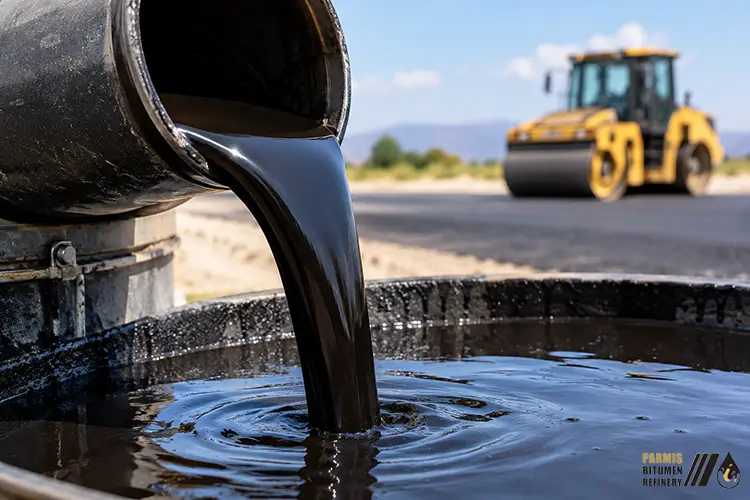
Bitumen emulsion is widely used in road construction and maintenance because it allows bitumen to be applied at lower temperatures than conventional hot bitumen. It consists of bitumen droplets dispersed in water and stabilized with an emulsifying agent. Understanding its types, grades, applications, and setting behavior helps contractors and buyers select the right product for specific pavement requirements.
What Is Bitumen Emulsion?

Bitumen emulsion is a liquid mixture in which tiny droplets of bitumen are dispersed throughout water and kept stable by an emulsifier. This type of Bitumen products reduces the need for high-temperature heating during application, making it suitable for various road construction and maintenance operations.
Composition of Bitumen Emulsion
A typical bitumen emulsion contains three main components:
- Bitumen: The binder that provides adhesion, cohesion, and water resistance after the emulsion sets.
- Water: The continuous phase that allows bitumen to be applied in liquid form at relatively low temperatures.
- Emulsifier: A chemical agent that helps stabilize bitumen droplets and influences their electrical charge and breaking behavior.
During application, the emulsion gradually breaks as the droplets come together and the water separates through evaporation, absorption, or other interactions. The remaining bitumen forms the binding film.
Unlike conventional bitumen, which generally requires heating to achieve suitable workability, bitumen emulsion can be applied at substantially lower temperatures. Cutback bitumen, by comparison, uses volatile petroleum solvents to reduce viscosity. Emulsions generally avoid the need for those solvents, although their environmental impact still depends on formulation, production, transport, and application conditions.
The emulsion’s performance also depends on the properties of its base bitumen. For example, road projects may use conventional penetration grades such as Bitumen 60/70 or Bitumen 85/100 as starting binders, subject to the emulsion formulation and applicable specifications. These grades describe the base bitumen, not the emulsion’s setting classification.
Types of Bitumen Emulsion
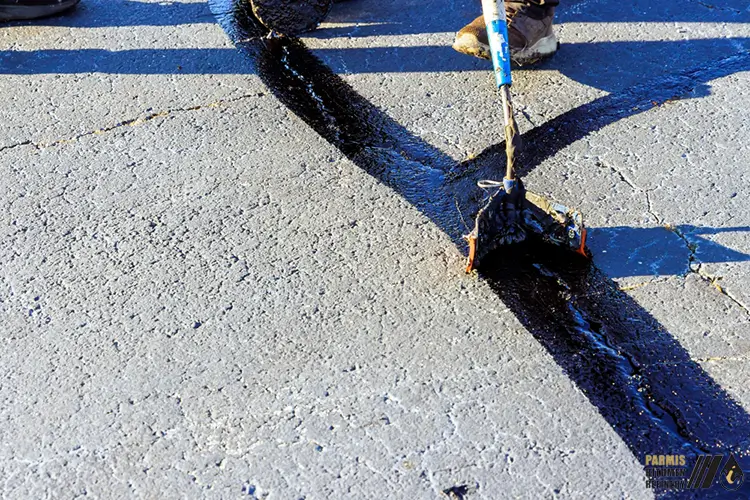
Bitumen emulsion types are classified mainly by the electrical charge of their droplets and their setting behavior. These are separate classification systems: an emulsion can be cationic or anionic while also being rapid-, medium-, or slow-setting.
Cationic and Anionic Emulsions
Cationic emulsions carry a positive charge, whereas anionic emulsions carry a negative charge. The charge influences interactions between the binder and mineral aggregates, including adhesion and breaking behavior. Cationic emulsions are widely used in road construction, but the appropriate type depends on aggregate compatibility and project specifications.
- Cationic emulsion: Common in road applications where adhesion to aggregates is important.
- Anionic emulsion: Used in selected applications where its formulation and compatibility suit the materials and operating conditions.
The two types should not be mixed indiscriminately. Combining incompatible emulsions can cause premature breaking and destabilization.
Rapid-Setting, Medium-Setting, and Slow-Setting Emulsions
Setting classifications describe how quickly an emulsion loses stability and allows the bitumen droplets to coalesce. Rapid-setting products suit applications that require quick breaking, while slower-setting products provide more time for mixing and spreading.
| Type | Main characteristic | Typical applications | Example grades |
| Rapid-setting (RS) | Breaks quickly | Chip seal and surface dressing | CRS-1 |
| Medium-setting (MS) | Allows more working time for mixing | Selected cold mixes and aggregate treatments | CMS-2 |
| Slow-setting (SS) | Provides longer mixing and spreading time | Slurry seal and suitable cold mixes | CSS-1 |
The letter C in these examples indicates a cationic emulsion. The numbers distinguish product classifications and properties under the relevant specification; they should not be interpreted as universal performance values.
Two terms are important when selecting a grade. Breaking describes the loss of emulsion stability and the coalescence of bitumen droplets. Curing describes the subsequent development of the applied layer as water leaves and the residual binder develops the required performance. Breaking does not automatically mean that the surface is ready for traffic.
Bitumen Emulsion Uses
Bitumen emulsion is used for tack coats, prime coats, chip seals, slurry seals, cold-mix asphalt, and pavement maintenance. The correct grade depends on the surface condition, aggregate properties, application method, and time available for the emulsion to break and cure.
Tack Coat and Prime Coat
A tack coat creates a bond between existing pavement and a new asphalt layer, helping prevent slippage and separation. A suitable rapid- or medium-setting emulsion may be specified, depending on the pavement system and local requirements.
A prime coat penetrates and binds the surface of an untreated granular base before subsequent pavement layers are placed. Its formulation must suit the base material, absorption characteristics, and project specification; not every emulsion is appropriate for priming.
Chip Seal and Surface Dressing
Chip seal, also called surface dressing, involves spraying bitumen emulsion onto a prepared surface and applying aggregate. A rapid-setting grade, such as an appropriate CRS product, can help bind the aggregate as the emulsion breaks. Traffic should be permitted only when the treatment has developed sufficient stability under the applicable specification.
Slurry Seal, Cold Mix, and Road Maintenance
Slurry seal combines bitumen emulsion, fine aggregate, water, and suitable additives to produce a mixture for surface renewal and minor pavement defects. Slow-setting emulsions are commonly used when sufficient mixing and placement time is required.
Emulsions are also used in cold-mix asphalt and patching materials, where they help bind aggregates without the conventional hot-mixing process. The selected grade must remain workable long enough for mixing and placement, then develop the required cohesion.
For larger road projects, emulsion selection should be considered alongside the broader Bitumen products range. Conventional paving binders, including Viscosity Grade Bitumen, serve different engineering requirements and should not be treated as direct substitutes without checking the design.
How Is Bitumen Emulsion Manufactured?
Bitumen emulsion is manufactured by dispersing hot bitumen into a prepared aqueous phase under controlled mechanical conditions. A typical production process involves the following steps:
- Prepare the water phase: Water is blended with an emulsifier and other formulation ingredients under controlled conditions.
- Prepare the bitumen: The base bitumen is heated to a suitable processing temperature.
- Emulsify the mixture: Both phases pass through a colloid mill, which breaks the bitumen into fine droplets and disperses them in water.
- Check product quality: The finished emulsion is tested against its intended grade and applicable specification.
Quality control may include tests for viscosity, residue content, particle charge, storage stability, and breaking behavior. Exact requirements vary by product and standard. Production conditions must be controlled because changes in formulation, temperature, and processing can affect emulsion stability and field performance.
Advantages and Limitations of Bitumen Emulsion
Bitumen emulsion offers lower-temperature application, convenient handling, and reduced dependence on heating during road works. However, its performance depends on weather, aggregate compatibility, formulation, and adequate time for breaking and curing.
Key advantages include:
- Lower application temperatures: Many operations can be performed without heating the binder to conventional hot-bitumen application temperatures.
- Practical handling: Liquid formulations can be distributed using suitable spraying and mixing equipment.
- Reduced solvent requirements: Unlike conventional cutback bitumen, standard emulsions do not rely on volatile petroleum solvents to achieve workability.
- Versatile applications: Different formulations support surface treatments, pavement bonding, cold mixes, and maintenance.
Important limitations include:
- Weather sensitivity: Low temperatures, high humidity, and wet surfaces can delay water loss and affect setting.
- Aggregate compatibility: An unsuitable emulsion can break too early or bond poorly with the selected aggregate.
- Curing requirements: A surface may remain vulnerable to traffic or moisture after initial breaking.
- Storage and handling: Stability can be affected by storage conditions, contamination, and incompatible materials.
Emulsion selection should therefore follow the project’s technical requirements rather than price or setting speed alone.
How to Choose the Right Bitumen Emulsion Grade
Choose a bitumen emulsion grade according to the intended road operation, aggregate characteristics, required working time, environmental conditions, and governing specification. A grade that performs well in a chip seal may not provide the workability needed for a cold mix.
Before purchasing, confirm the following:
- Application: Identify whether the project requires tack coating, surface dressing, slurry seal, priming, or cold-mix production.
- Setting behavior: Select a breaking rate that allows sufficient time for spraying, mixing, or aggregate placement.
- Material compatibility: Check the aggregate type, surface condition, and required adhesion.
- Technical compliance: Verify viscosity, residue content, storage stability, and other grade-specific requirements.
- Delivery requirements: Confirm packaging, transport conditions, and the product’s technical documentation.
The distinction between emulsion grades and conventional binders is particularly important. VG 10 Bitumen, VG 20, VG 30 Bitumen, and VG 40 Bitumen are viscosity-graded binders, while Bitumen PG refers to performance grading. Neither system is interchangeable with emulsion setting classifications such as CRS-1 or CSS-1. The base binder must be selected according to the formulation and intended application.
For procurement, compare the quoted Bitumen Price with the technical specification, residual binder content, packaging, and delivery terms. If evaluating suppliers, clarify whether the offer is for emulsion or conventional bitumen, since their specifications and commercial terms differ.
Export buyers should also confirm the loading point and destination. For example, Bitumen price bandar abbas may be relevant when assessing Iranian export logistics, while Bitumen China and Bitumen jebel Ali may relate to sourcing or destination-market research. These search terms alone do not establish a comparable price; product grade, volume, Incoterms, and freight must also be checked.
Packaging can further affect landed cost. Bulk bitumen, Drum bitumen, and Jumbo bitumen are supply formats associated with conventional bitumen procurement, and should only be compared with an emulsion offer when the products and specifications are genuinely equivalent. Buyers considering Fob Iran bitumen should verify the agreed loading port, export documentation, and contractual delivery terms.
Choose the Right Bitumen Solution for Your Project
Selecting the right binder requires more than identifying a grade. Application method, technical compliance, packaging, and delivery conditions all influence the final decision. At Parmis Bitumen, we can help you review your requirements and identify suitable Bitumen products for your project.
Contact our team to discuss product specifications, sourcing requirements, and export options. When comparing suppliers such as Jey bitumen and Pasargad bitumen, evaluate the actual product documentation and commercial terms rather than relying on supplier names alone.