
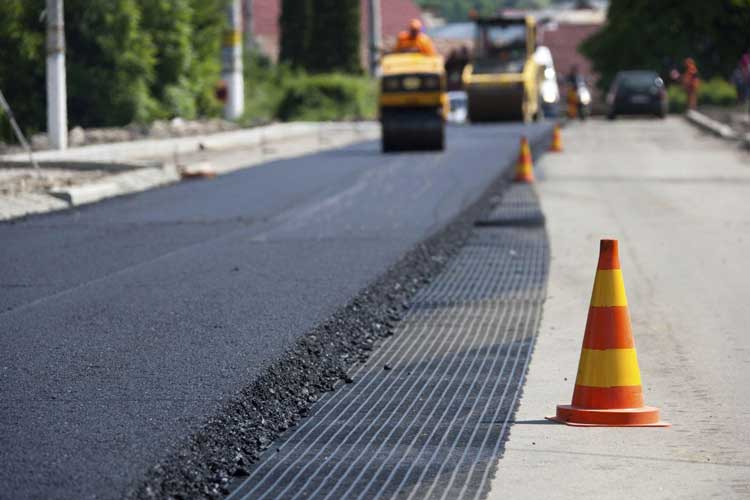
You may have noticed cracks and deterioration in a newly built road after only a few months. Different types of bitumen contribute significantly to road durability and performance. Selecting the right bitumen has a significant impact on project quality, ranging from polymer-modified bitumen for areas with extreme temperature variations to cutback bitumen for road surface preparation. This article will teach you more about the properties, standards, and how to choose the best bitumen.
Everything You Need to Know About Bitumen in Road Construction
This material, derived from crude oil refining, is used in asphalt mixes for its adhesive properties, water resistance, and flexibility. Bitumen not only improves road surface performance, but it also helps to prevent pavement erosion and cracking.
Bitumen is classified into two types for road construction: petroleum bitumen and natural bitumen. Petroleum bitumen is produced directly from crude oil refining, whereas natural bitumen is extracted from natural deposits and has superior adhesion and durability. The type of bitumen used is determined by climate, traffic volume, and the type of road construction project.
Furthermore, new technologies have made it possible to improve bitumen performance. For example, using performance-graded bitumen classified according to SHRP standards improves road durability. This type of bitumen is highly resistant to deformation, thermal cracking, and wear from traffic. Knowing the Iran bitumen price can also help you plan your budget and choose the most cost-effective option for construction projects.
Natural or petroleum bitumen: Which is better for roads?
Natural bitumen, also known as gilsonite, is extracted from natural deposits and typically has high strength and adhesion. It is sometimes combined with petroleum bitumen to enhance performance.
Petroleum bitumen, on the other hand, is produced through crude oil refining and has different properties depending on the method of production.
Petroleum bitumen is classified into several types, including penetration grade, viscosity grade, such as VG 40 bitumen, and emulsion bitumen. These bitumen are widely used in modern road construction because their mechanical and performance properties can be tailored to project specifications.
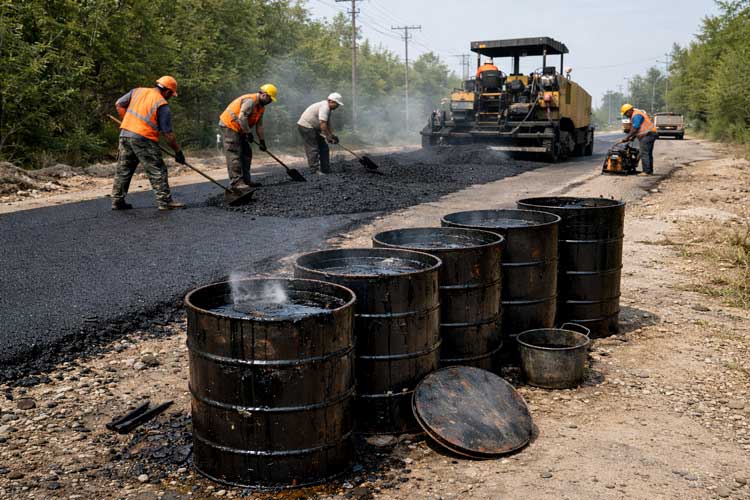
Different Types of Bitumen Used in Road Construction
Depending on the application and environmental conditions, different types of bitumen are used in road construction. The most important types include:
Petroleum bitumen
This bitumen is a byproduct of crude oil refining and is classified into several grades, including penetration and viscosity grades. Penetration grade bitumen is the most common type of road asphalt, and it is applied based on climate conditions.
Polymer Modified Bitumen (PMB)
This type of bitumen contains polymers, making it more resistant to cracking, deformation, and temperature changes. Polymer-modified bitumen works best in areas with harsh and changing weather conditions.
Cutback bitumen
Cutback bitumen is made by combining pure bitumen with petroleum solvents and is used for initial asphalt layers and road base stabilization. It is classified as rapid, medium, or slow curing based on the solvent used.
Natural Bitumen for Road Construction
This type of bitumen, derived from natural deposits, is extremely water-resistant and is typically blended with petroleum bitumen. Gilsonite is one of the best-known natural bitumen.
Methods of testing bitumen quality in road projects
Several tests are conducted to ensure that bitumen works optimally in road construction. The main quality tests are
- The penetration test determines the hardness and penetration grade of bitumen.
- Viscosity Test: Determines the resistance of bitumen to flow.
- Tensile test: Determines the flexibility of bitumen.
- The softening point test determines the temperature at which bitumen transitions from a solid to a semi-solid state.
Knowing the market price of bitumen can also help you make more informed purchasing and usage decisions for road construction projects.
| Also read: Everything You Need to Know About High-Quality Bitumen for Road Construction |
The advantages and disadvantages of various bitumen types in road construction
The use of various types of bitumen in road construction has both advantages and disadvantages. The following sections look at some of the positive and negative aspects of this important material in the road construction industry.
Advantages
High Adhesion: Bitumen has excellent adhesive properties and mixes well with aggregate.
Water resistance: Bitumen roads are resistant to water penetration.
High Flexibility: Some types, such as polymer-modified bitumen, are extremely flexible and reduce cracking.
Disadvantages
Temperature Sensitivity: Certain bitumen become brittle at low temperatures and soft at high temperatures.
Environmental Impact: While being produced and used, some petroleum bitumen emit pollutants into the environment.
Conclusion
Different types of bitumen play an important role in improving road durability and performance. Polymer-modified, cutback, and natural bitumen are all designed for specific conditions. Penetration, viscosity, and tensile strength tests all help to determine bitumen quality.
In this article, we reviewed methods for selecting the appropriate bitumen for road construction projects. For the most recent road construction articles, go to the Parmis website.
Frequently Asked Questions
Which type of bitumen works best in hot climates?
Polymer-modified bitumen is an appropriate choice for hot climates. It resists softening at high temperatures and minimizes asphalt deformation.
How can bitumen quality be determined in road construction projects?
Penetration, softening point, viscosity, and tensile strength tests are used to evaluate bitumen quality and resistance to environmental factors.
Do natural bitumen work well in road construction?
Yes, natural bitumen such as gilsonite, when combined with petroleum bitumen, improve adhesion and extend the life of asphalt.