
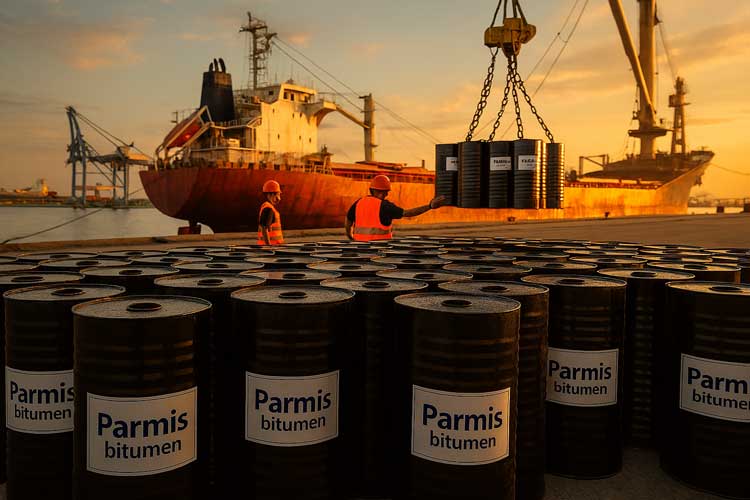
Auxiliary costs such as packing, shipping, and loading have a significant impact on the final cost of bitumen. The type of packaging (drums, bulk, or bags), whether the transport is for export or domestic use, and even the kind of hauling vehicle are some of the variables that affect these expenses. For instance, the final price of bitumen increases because packaging in metal drums is more costly than bulk transport.
Transporting the bitumen to the port or the destination nation is one of these auxiliary expenses, which has a big influence on the total cost. In this article, we look at how these expenses impact bitumen’s final cost and why large-scale purchases may suffer financial losses if they are ignored. This Parmis guide is essential if you plan to buy bitumen for a project or for export.
Factors Affecting Bitumen Prices in 2025
Bitumen price fluctuations are influenced by a number of variables, each of which can significantly affect the total cost. The price of crude oil, which is used as a raw material to make bitumen, is among the most significant. However, the final price is also significantly influenced by the rate of vacuum bottom (VB) used in refining. In some projects, the specification of Viscosity Grade Bitumen may also influence cost patterns due to production adjustments.
Foreign exchange rates, the state of the world market, seasonal variations in supply and demand, and modifications to packaging and transportation regulations are additional elements that should not be disregarded. The combination of these elements can make the bitumen price change weekly or even daily.
The Role of Exchange Rates and Political Conditions of Producing Countries in the Bitumen Price
One of the most significant factors influencing bitumen pricing, particularly in international transactions, is the exchange rate. The price of bitumen imports and exports rises in tandem with the value of the US dollar or other reference currencies. For nations that obtain their bitumen from outside sources, this problem is especially difficult.
However, the bitumen market is significantly impacted by the political and security environments of oil-producing nations. For example, supply may decrease and prices may increase if disputes or sanctions arise in Middle Eastern nations that export bitumen and oil.
How Bitumen Packaging Impacts the Total Price
One of the key factors affecting the ultimate cost is the kind of bitumen packaging. Although appropriate packaging can lower transportation costs, it may also increase the initial cost. Each type of packaging, whether it be in cans, metal drums, or bulk form, has unique features and expenses.
The final supply price is influenced by a number of factors, including the type of welding used on the drum’s lid and bottom, the thickness of the drum metal sheet, and the quality of the packaging material. For export, metal drums with a thickness of 0.6 to 0.7 mm are common and lead to about an 8% to 10% increase in cost compared to bulk bitumen transport.
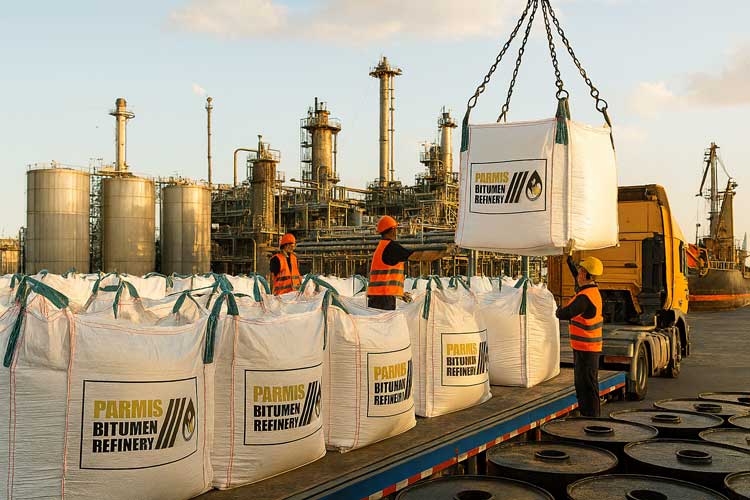
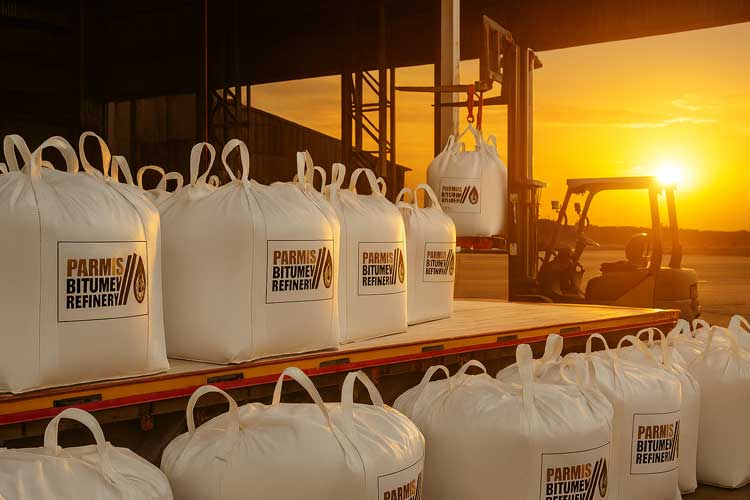
Drum bitumen is packaged in metal drums of 190 or 220 litres; each empty drum weighs about 9 to 11 kilos. The packaging cost per unit for this method varies greatly based on specifications, and it is more popular for export. On the other hand, bulk bitumen transportation is more economical but necessitates specialized equipment for unloading. Bitumen in smaller metal cans (17 kg) is used more for limited or construction‐site applications. Some buyers also opt for jumbo bitumen bags when large-volume but flexible packaging is required.
Terminology:
- Drum Bitumen refers to bitumen packaged in metal drums for easier handling and export.
- Bulk bitumen, which is frequently used in large projects or domestic supply, is bitumen that is transported without individual containers.
A Comprehensive Analysis of Transportation Expenses and How They Affect Bitumen Prices
One of the primary factors influencing bitumen’s final cost is transportation expenses. Transportation costs could make up as much as 30% of the total cost, depending on how far the production plant is from the project site or export destination. of the final cost. The type of transport vehicle, fuel price, transit tariffs, transit duties, and road conditions are some of the factors that affect this. A few specifics
- Especially for maritime transportation, long routes between the export destination and the origin raise the cost.
- The cost of using insulated tankers or special containers for molten bitumen is increased.
- The cost of cargo insurance is influenced by weather and road hazards.
- Costs associated with loading and unloading at the origin or destination are sometimes computed independently.
- Although there are route restrictions, rail transport is usually less expensive than road transport.
Due to the longer distances, bitumen transportation to isolated cities like Chabahar or Bandar-Turkemen is more expensive in the domestic Iranian market. For example, the cost of transporting one ton of bitumen from Tehran to Bandar Abbas falls within a specific range. Due to their close proximity to the border, export routes like Iraq and Afghanistan are less expensive.
Costly vs. Cheaper Bitumen Transportation Routes Both Domestically and Internationally
Due to the long distance, bitumen transportation to isolated cities like Chabahar or Bandar-Turkmen in Iran’s domestic market entails higher transportation costs. Bitumen transportation from Tehran to Bandar Abbas costs between 800,000 and 1,200,000 tomans per ton. Because of their close borders, export routes like Iraq and Afghanistan are less expensive.
Summary
The effect of auxiliary costs on final bitumen pricing is one of the primary subjects discussed in this article. Items such as the type of packaging, method of transport, and operational costs all play a big role in finalizing the cost. For example, transporting bitumen to neighboring countries such as Iraq or Afghanistan by trailer is more expensive than transporting it domestically by truck.If you want to make an informed decision when purchasing bitumen, we recommend paying attention to the following points. For more information, see the blog articles and follow Parmis for specialized consultation.
FAQ
How much are the packaging costs for bitumen, and what factors affect them?
A: Packaging costs depend on the type used; for example, an export‐grade metal drum may cost up to a certain amount per drum.
Does the type of packaging affect the quality preservation of bitumen?
A: Yes—suitable packaging like a drum with internal coating helps prevent leakage and contamination, preserving quality during transportation.
Does the transportation rate of bitumen vary across seasons?
A: Yes—in summer and during peak export periods, transportation costs rise due to increased demand and a shortage of vehicles.